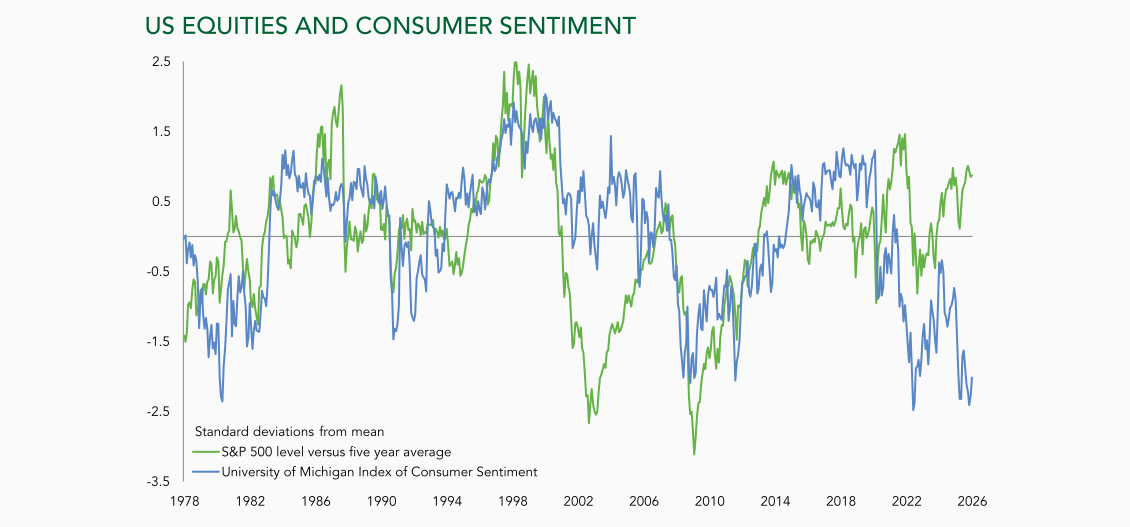



Stimulus cheques, public spending drives, housing support, renewed tariffs, geopolitical brinkmanship and pressure on the Federal Reserve to lower interest rates have all been floated as remedies. Each could deliver a sugar hit to voter confidence but, taken too far, risks upsetting investor sentiment or undoing hard won disinflation.
And Trump can’t decree prices lower. The recent proposal to cap credit card interest shows how limited his levers are. Ironically, one thing that might genuinely depress prices would be if his tariffs were struck down in court. Imagine a president quietly hoping his own flagship policy is invalidated by the judges he loves to loathe.
The mood in Washington is triumphalist after recent geopolitical successes, notably in Venezuela. Buoyed by momentum, the administration appears poised for bolder moves. Whilst investors have so far cheered the administration’s giveaways, the UK’s recent experience and the reaction to Japanese Prime Minister Takaichi’s proposals, show how quickly markets can rebel when generosity overshoots prudence.
We believe Washington will continue to run the economy hot, juicing growth and perhaps asset prices for a while longer. But, given already solid growth, election-winning policies risk unanticipated market and inflation volatility.
This wouldn’t be the first time inflation’s second act was written in Washington. History shows that price pressures tend to come in waves, often triggered by political impatience.
At Ruffer, our goal is straightforward: to own a collection of assets that, together, can deliver meaningful returns whether markets prove benign or otherwise. Around a third of the portfolio sits in global equities, focused on sectors likely to benefit from lower borrowing costs and pre-election stimulus. Should 2026 veer away from the Goldilocks scenario, the portfolio is well protected through a range of inflation hedges that include precious metals and commodities exposure, as well as our holdings in the yen, and equity and credit derivatives. In combination, these positions should allow us to prosper whether the year brings steady ascent, overheating or renewed weakness.
As Jonathan Ruffer’s long‑standing philosophy reminds us, true resilience lies not in predicting the timing of the next crisis, but in being prepared for it.


