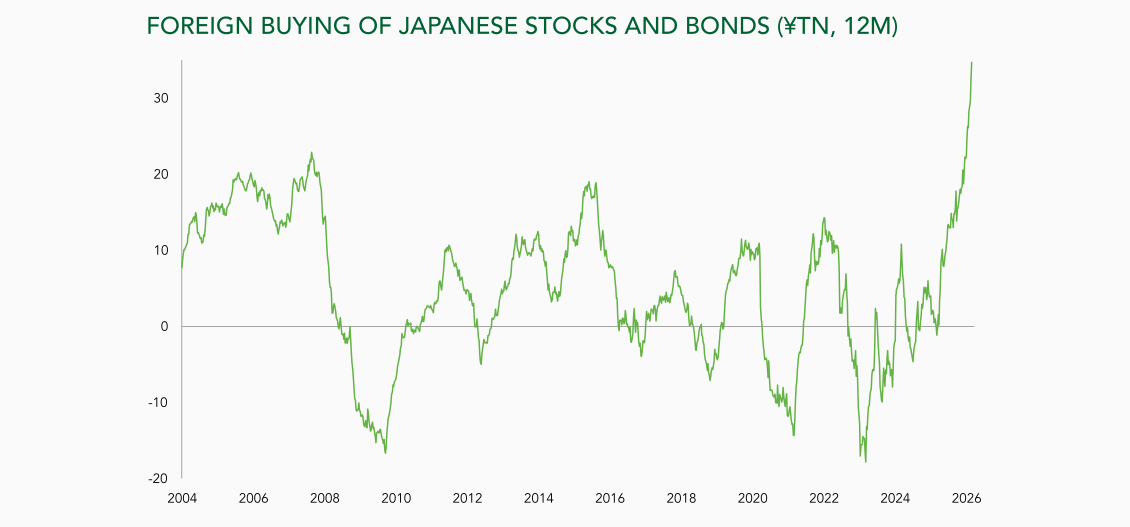




While the details are still to be fully ironed out, Takaichi has stated she wants to move Japan away from ‘excessive fiscal austerity’ and to remedy the country’s cost of living crisis – a key issue for the electorate. To boost growth, she has proposed a stimulus package worth ¥21.3 trillion (around $135 billion), which is 3.7% of Japan’s GDP. She has also pledged to suspend the 8% consumption tax on food for two years and to introduce gas and electricity subsidies. Despite her commitment to providing strong leadership for Japan, if markets lose confidence in Takaichi, this level of spending could lead to a Liz Truss style meltdown.
Beside the election result and Takaichi’s pro-growth policies, other factors may underpin the structural growth story that is attracting investors.
Firstly, Japan appears to have emerged from the deflationary spiral that had plagued the economy for two decades. Now that inflation is mildly positive (CPI has averaged 2.55% per year in Japan over the last three years), it’s more attractive for companies to invest their cash. Alternatively, they can increase wages to help workers keep up with the higher cost of living. Regular pay growth for full-time employees averaged 2.3% year on year through 2025, compared with an average of 0.4% through 2019. That, in turn, leads to more spending as inflation incentivises consumers to buy today rather than waiting until tomorrow.
Secondly, regulators are encouraging companies to reduce their cash stockpiles, a drive Takaichi supports. Japan is revising its Corporate Governance Code, which defines how companies should generate long-term value for shareholders. This will require firms to ‘verify and justify’ that they are using their cash effectively rather than letting it sit idle. Meanwhile, the Tokyo Stock Exchange has entered its final restructuring phase in 2026. A potential delisting awaits companies which fail to improve their capital efficiency, specifically those with a price-to-book ratio below 1x – that is, the company’s stock market valuation is less than the value of its physical assets. Many Japanese companies have been selling physical assets in reaction to this. Ink and resin maker DIC is even selling paintings from its art holdings, including a Monet which went for over $45 million.
Taken together, these factors suggest the recent optimism may be more than just a post-election sugar high. The decisive mandate for Takaichi and the clearer fiscal outlook have reduced near-term uncertainty and boosted investor confidence. Meanwhile, the end of entrenched deflation, improving corporate governance standards and pressures to enhance capital efficiency are driving a longer-term behavioural change within Japanese companies. Although risks remain, these present a compelling foundation for Japan’s long-awaited economic revival.
At Ruffer, portfolios have benefited from holding 5% in a broad range of Japanese stocks, and a 2% allocation to long-dated Japanese bonds. The portfolio continues to have a 15% cash exposure to the yen, held as both a protective asset (historically, the yen has appreciated in periods of market stress) and a potential beneficiary of increased flows into Japanese assets.


