ESG is suddenly everywhere, though becoming more confusing and contentious by the day.
Environmental, social and governance factors were amalgamated into a single acronym in 2004 as part of a UN-sponsored initiative to persuade us that such issues were not merely of discretionary interest to socially responsible investors but increasingly central to proficient asset management. ESG factors should no longer be thought of as costly distractions but rather as drivers of performance.
Hence, ESG was a crystallisation of the notion that sustainability can be a win-win for investors – simultaneously good for profit and planet. The hope was that sustainability-aware markets would direct capital towards solution technologies and business models for which demand and profitability would increase, triggering a virtuous circle in which ESG investors would benefit by resolving social and ecological problems.
The idea has certainly gained traction. The Global Sustainable Investment Alliance estimates that global ESG assets now account for one third of total assets under management, while ESG-themed ETFs – a newer development – have grown tenfold since 2017.
Inevitably, with this growth have come challenges. Some financial institutions have exaggerated their sustainability claims – so-called greenwashing – leading regulators to levy fines and formulate an official taxonomy of environmentally sustainable actions.
From another direction, anti-ESG or anti-woke actors question the premise that businesses should care about such factors and have persuaded several US states to sell or avoid ESG investments.
Yet much mainstream commentary ignores the key issue that motivated ESG pioneers: is ESG investing making the world more sustainable?
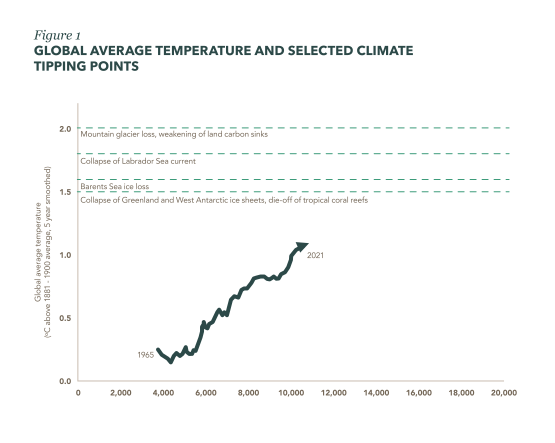
On this critical matter, doubts are rising, for two major reasons. First, the scientific community is warning that global ecological challenges may be greater and more imminent than first understood. Second, after 20 years, the win-win narrative has less to show for its efforts than hoped.
This article reviews each dynamic in turn.