



Firstly, the Turkish central bank sold a significant chunk of its gold reserves in March in an attempt to protect its currency. Although it resumed buying in April, the episode reminded investors that these institutions could reduce as well as increase reserves. Secondly, retail demand for the metal cooled, most notably in India where President Modi responded to the energy crisis by more than doubling tariffs on gold to discourage non-essential imports.
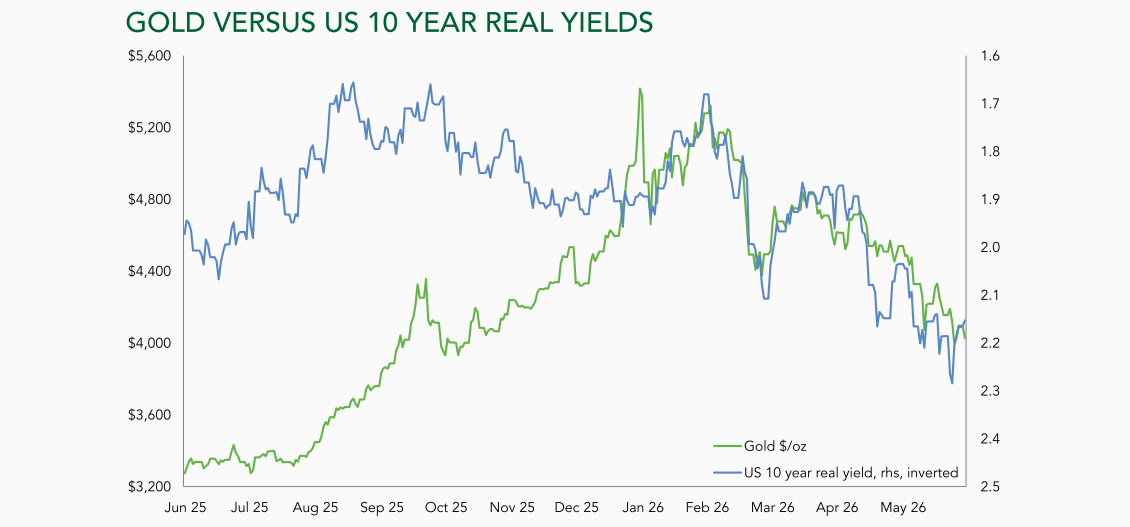
Most significantly, institutional allocators have become sellers as global bond yields spiked with oil prices in anticipation of higher inflation and a shift from rate cuts to hikes. The oil price has since receded, but strong US economic data and tough rhetoric on inflation from new Federal Reserve Chair Kevin Warsh have kept real yields high. Speculative positioning in futures and options has reversed, amplifying the fall in the gold price.
While central banks have stepped in to buy the dip, they have been unable to establish a floor. Investors have taken Warsh at his word on delivering price stability. US yields and the dollar have risen; inflation expectations (proxied by breakeven rates) have fallen. If markets were buying gold as a debasement trade – owning real assets to protect against the risk that authorities devalue fiat currencies – they are selling it as a rebasement trade.
Aside from helping to explain the sell-off since February, the relationship between gold and yields is key when considering the metal’s role in portfolios. Its beta (a measure of one asset’s sensitivity to movements of another) to US yields is at five year highs. Since equities and bonds have been positively correlated, gold’s beta to equities (proxied by the S&P 500) has risen to its highest in 40 years. While it has traditionally been considered a safe haven, gold has been behaving as a risk asset.
We continue to believe in gold’s structural role in a portfolio. When push comes to shove, central banks are unlikely to focus on price stability at the expense of market stability. Gold’s attraction is as a real asset that is not tied to fiat currency. However, it is equally important to consider gold’s current characteristics as a portfolio asset. It has not been diversifying risk but compounding the pain of the positive equity-bond correlation. In this environment, maintaining low exposure is prudent. We have consistently reduced gold exposure from spring 2025. But we maintain an allocation to gold mining equities, which remain highly profitable even at a bullion price significantly below the current level.


